




PATIENT STORY
I can finally dress myself
The story of Mr Andrzej, who experienced an intracerebral hemorrhage and is working to regain function in his left arm and greater independence in everyday life.
37 years old
8 weeks of therapy
„
The first few weeks were extremely difficult. I was bedridden and couldn’t even sit upright on a chair or bed.
MR ANDRZEJ, 37
Regaining function in his left arm is helping Mr Andrzej become more independent in everyday life.
The starting point
In May 2025, Mr Andrzej experienced a spontaneous intracerebral hemorrhage, resulting in left-sided hemiparesis. The greatest limitations affected his left upper limb, which was initially non-functional.
Medical history
Status post spontaneous intracerebral hemorrhage in May 2025.
Main challenge
Significant impairment of left upper limb function associated with paresis, muscle weakness and increased muscle tone.
Additional challenges
A tendency to clench the left hand, paresis of the left lower limb and mild weakness of the left side of the face. Mr Andrzej was able to walk only short distances with the assistance of a quad cane. His speech was slightly slowed but remained understandable.
THERAPEUTIC CHALLENGE
Restoring functional movement of the upper limb
The main therapeutic challenge was to improve Mr Andrzej’s ability to consciously use his left arm during everyday activities.
Therapy focused on:
- sensorimotor stimulation of the upper limb,
- facilitating purposeful movement,
- supporting activation of weakened muscles,
- preparing the upper limb for more functional activities.
THERAPY
Movement training supported by electrostimulation
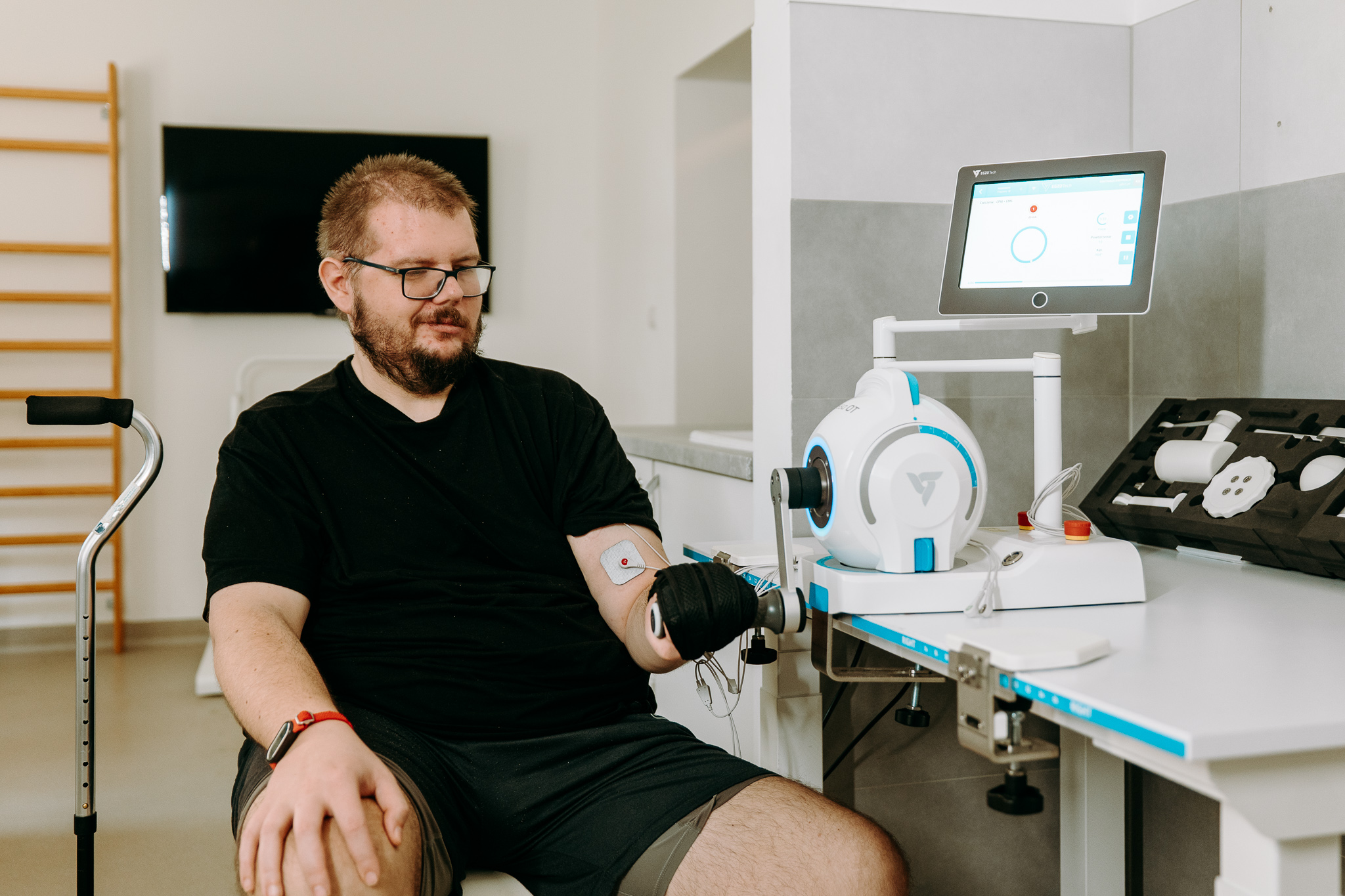
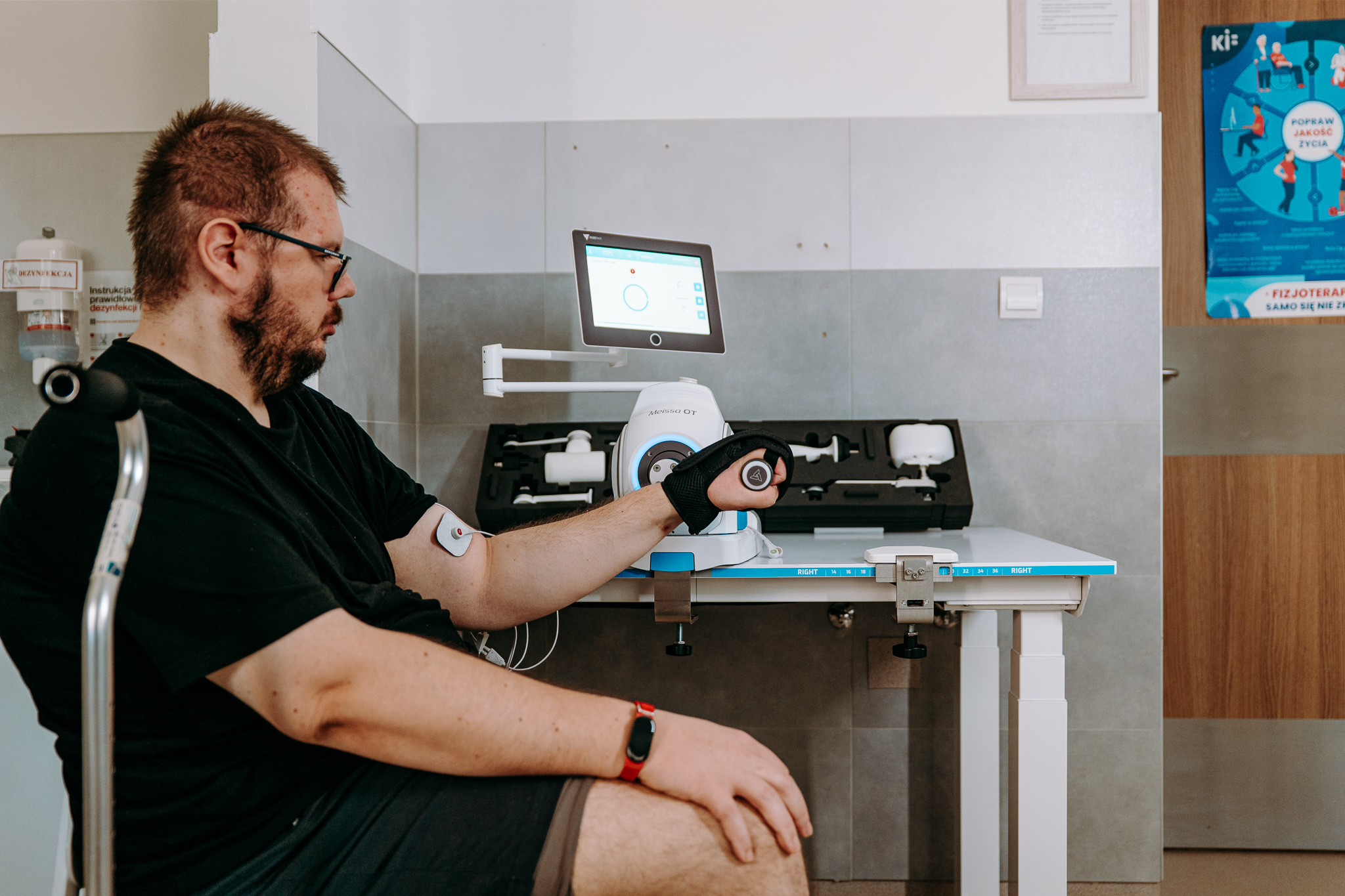
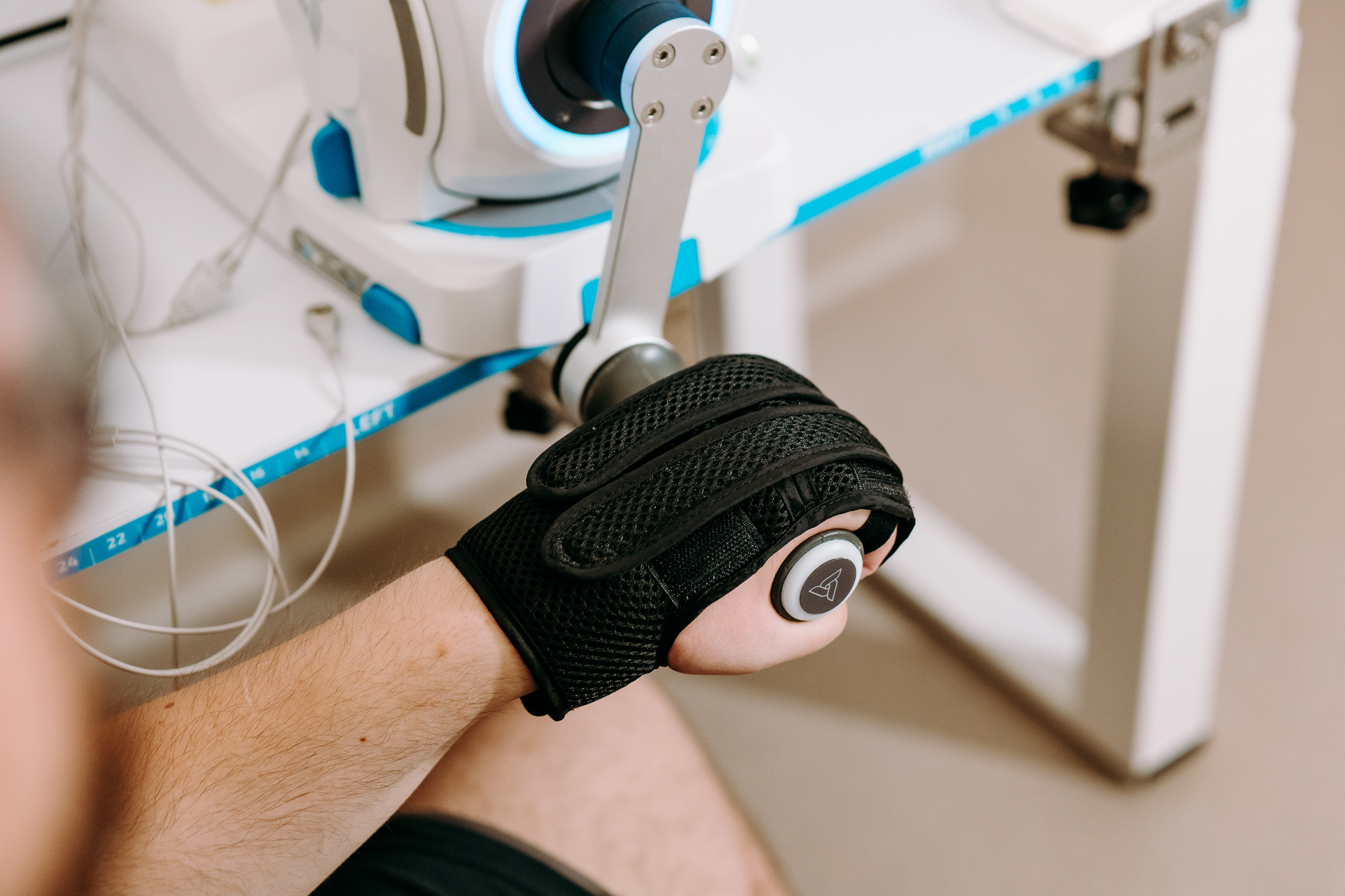
Therapy included the Meissa OT system combined with CAM training and electrostimulation.
Mr Andrzej performed exercises using a rotational end effector. The task focused on sensorimotor stimulation and facilitating functional movement of the left upper limb.
CAM training
The patient actively participates in the movement task, working on movement control and repeatability.
Electrostimulation
Electrostimulation is used during training to support the activation of muscles involved in the exercise.
Functional rotational movement
The rotational end effector enables repetitive upper limb movements to be performed under controlled therapeutic conditions.
VIDEO STORY
See the therapy in action
Watch part of Mr Andrzej’s rehabilitation and his left upper limb training using Meissa OT combined with electrostimulation.
THERAPY OUTCOMES
Greater freedom of movement and independence
Therapy progress was reflected in reduced muscle tone, improved range of motion and greater independence in everyday activities.
BEFORE THERAPY
 Increased muscle tone
Limited shoulder range of motion
→
AFTER THERAPY
 Reduced muscle tone
Increased shoulder range of motion
01
Reduced muscle tone
Reduced muscle tone in the arm makes movement easier and improves comfort during upper limb activity.
02
Zwiększony zakres ruchu w barku
Improved shoulder mobility allows Mr Andrzej to lift and position his upper limb more effectively.
03
Dressing independently
MOST IMPORTANT OUTCOME
A step towards greater independence
“Thanks to Meissa OT, I have increased the range of motion in my shoulder. […] Today, I can finally put on a shirt by myself and no longer need help from others when getting dressed. […] It gives me a sense of independence. It gives me hope that things will get better. […]”
Each regained hand function increases the ability to perform everyday activities independently.
SOLUTIONS FOR MODERN REHABILITATION
Would you like to see how Meissa OT can support therapy at your facility?
Disclaimer: This case study presents an individual patient’s experience. Therapy outcomes may vary depending on the patient’s clinical condition, rehabilitation program and other individual factors.