




„
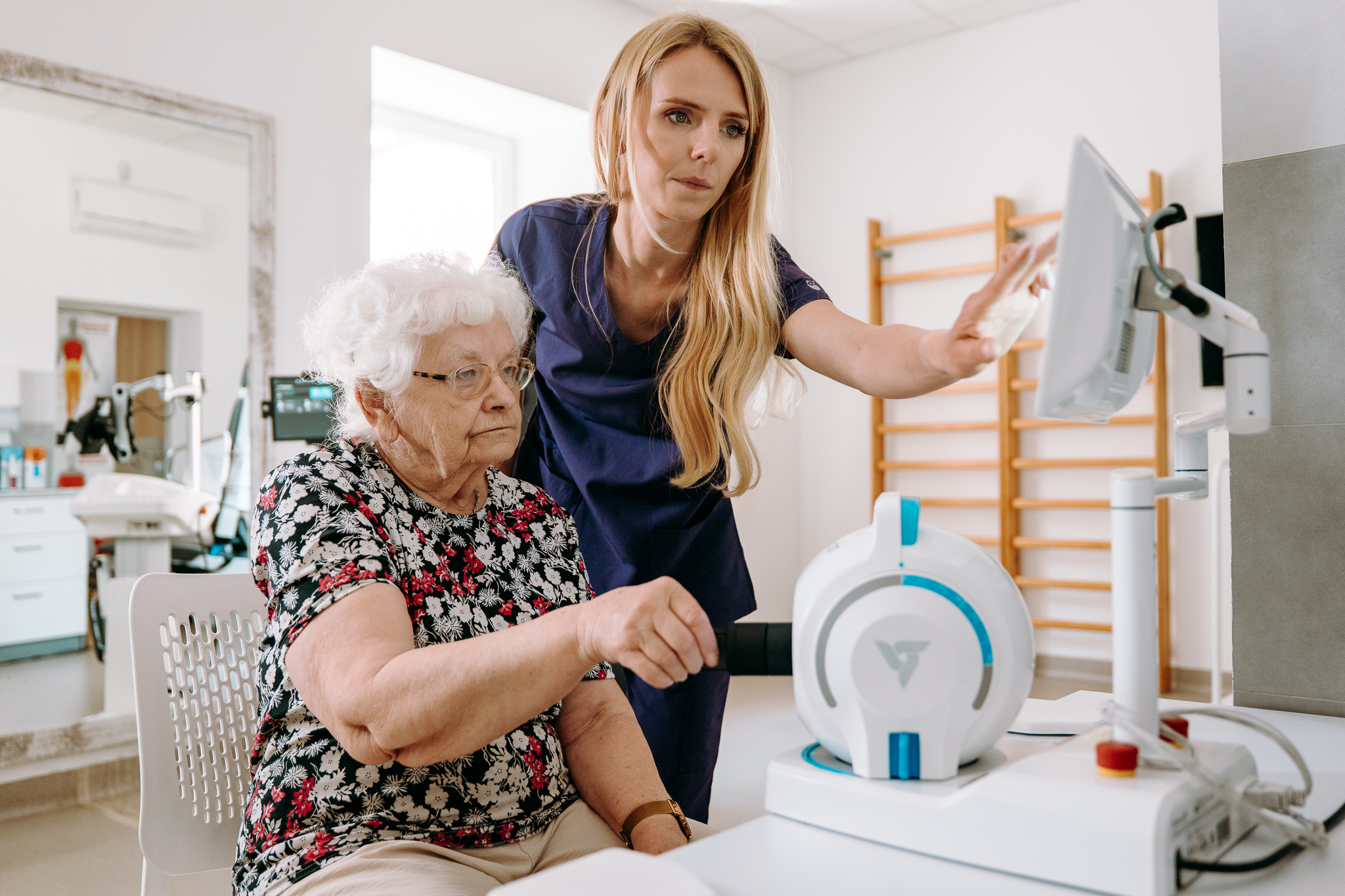
When I first came for rehabilitation, my hand had a severe contracture. At the beginning, it was completely immobile. Now I can perform more than 60 repetitions, while at first I couldn’t do even one.
MRS DOROTA, 78
The most important measure of progress is not the score shown by the device, but regaining independence in everyday life.
The starting point
Although Mrs Dorota retained some function in her right upper limb, its usefulness in everyday life was significantly limited. Contracture, weakness and reduced precision affected her ability to perform daily activities independently.
Medical history
History of two strokes — in 2017 and 2021.
Main challenge
Persistent right-sided hemiparesis and significant hand contracture.
Additional challenges
Significant hand contracture limiting precision and endurance.
THERAPEUTIC CHALLENGE
Restoring function that matters in everyday life
The hand was weak, fatigued quickly, and reduced precision made manual activities extremely difficult.
- reduce hand contracture
- improve range of motion
- increase strength and endurance
- regain motor control
The goal was not simply to improve the results measured by the device, but to help the patient regain real independence in everyday life.
THERAPY
Purposeful movement. Immediate feedback. Hundreds of repetitions.
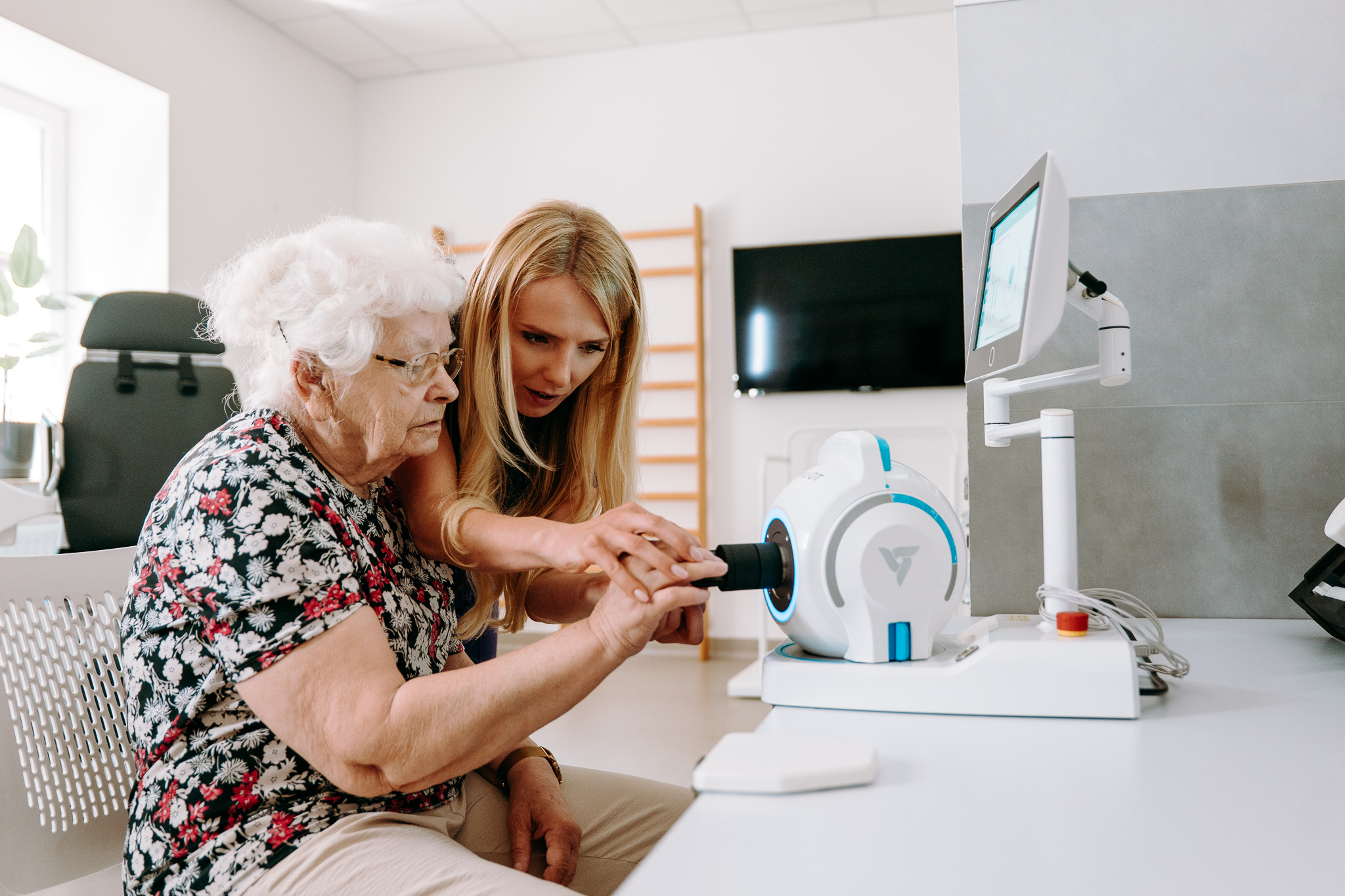
Meissa OT was incorporated into a comprehensive rehabilitation program as a complement to conventional physiotherapy. Training focused on repetitive, functional activities involving rotational movements.
Stable and secure positioning
A specialized glove helped maintain the correct hand position and enabled Mrs Dorota to begin training despite the contracture.
Functional rotational movement
The exercises reproduced movements used in everyday activities, such as turning a manual coffee grinder.
Regular training for 3 weeks
Repetitive, purposeful movements supported improvements in range of motion, strength, endurance and motor control.
VIDEO STORY
Mrs Dorota tells her story best
Watch Mrs Dorota describe her initial condition, the course of therapy and the changes she has noticed in her everyday life.
RESULTS AFTER 21 DAYS
Progress visible in the numbers — and felt in everyday life
Progress was reflected both in objective training results and in the patient’s increasing independence.
AT THE BEGINNING0
full repetitions
→
AFTER 3 WEEKS60+
smooth repetitions during a single session
01
Greater range of motion and endurance
Movement became smoother, and the hand was less prone to fatigue.
02
Greater strength and precision
The contracture decreased, while muscle strength and motor control improved.
03
Greater independence in everyday activities
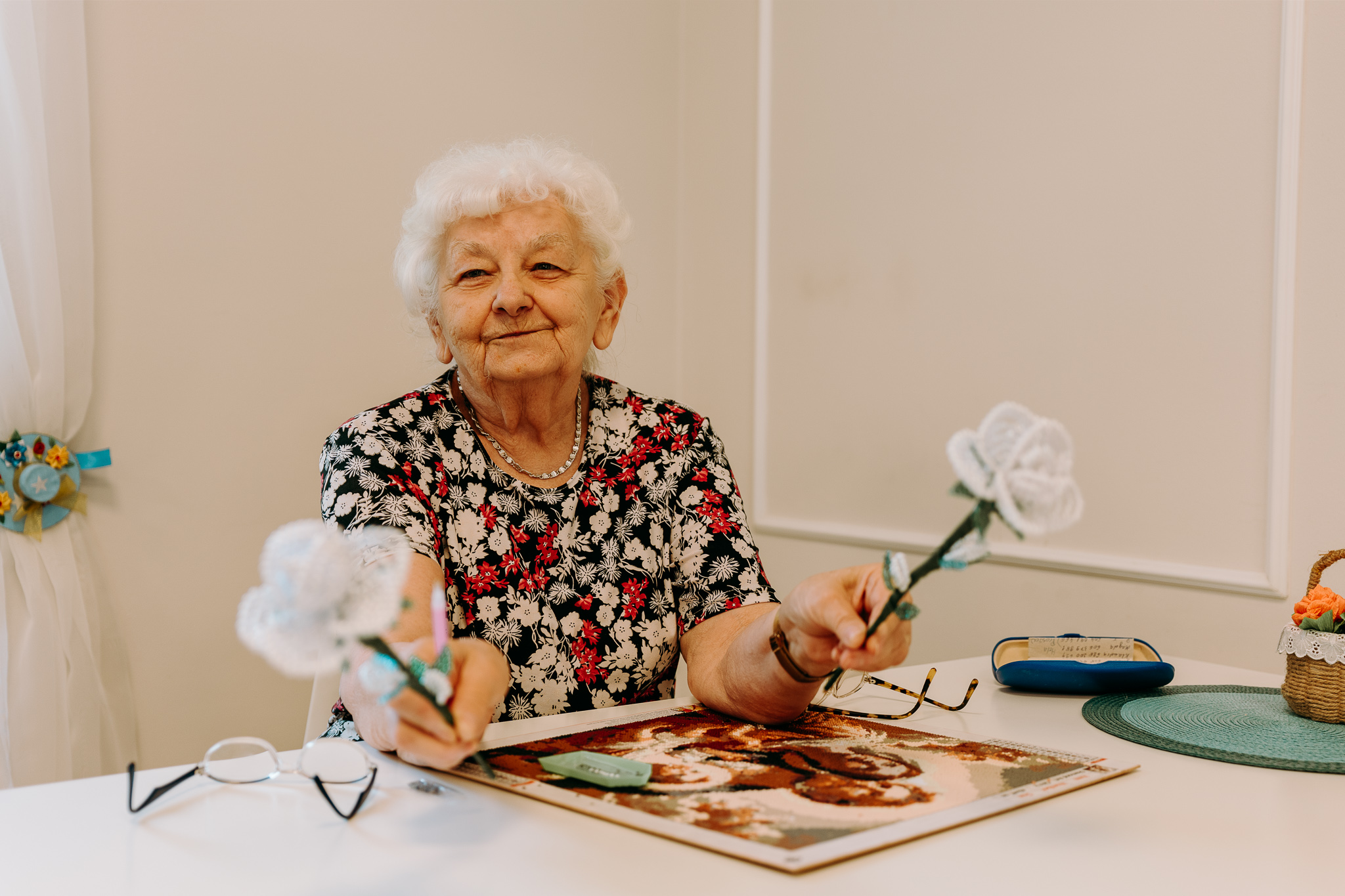
Mrs Dorota can now wash and comb her hair independently and perform manual activities.
MOST IMPORTANT OUTCOME
Getting back to the activities that make up everyday life
“Today I am able to wash and comb my hair independently and do manual activities such as embroidery and painting.”
Translating the effects of therapy into greater independence in everyday life is Mrs Dorota’s most important achievement.
SOLUTIONS FOR MODERN REHABILITATION
Would you like to see how Meissa OT can support therapy at your facility?
Disclaimer:
This case study presents an individual patient’s experience. Therapy outcomes may vary depending on the patient’s clinical condition, rehabilitation program and other individual factors.