




PATIENT STORY
Today the foot doesn’t drop like that anymore
The story of Mr. Eugeniusz, who has been suffering from multiple sclerosis since 2013 and is working to improve his gait and regain greater confidence when moving.
13 years since diagnosis
Therapy: Ongoing
„
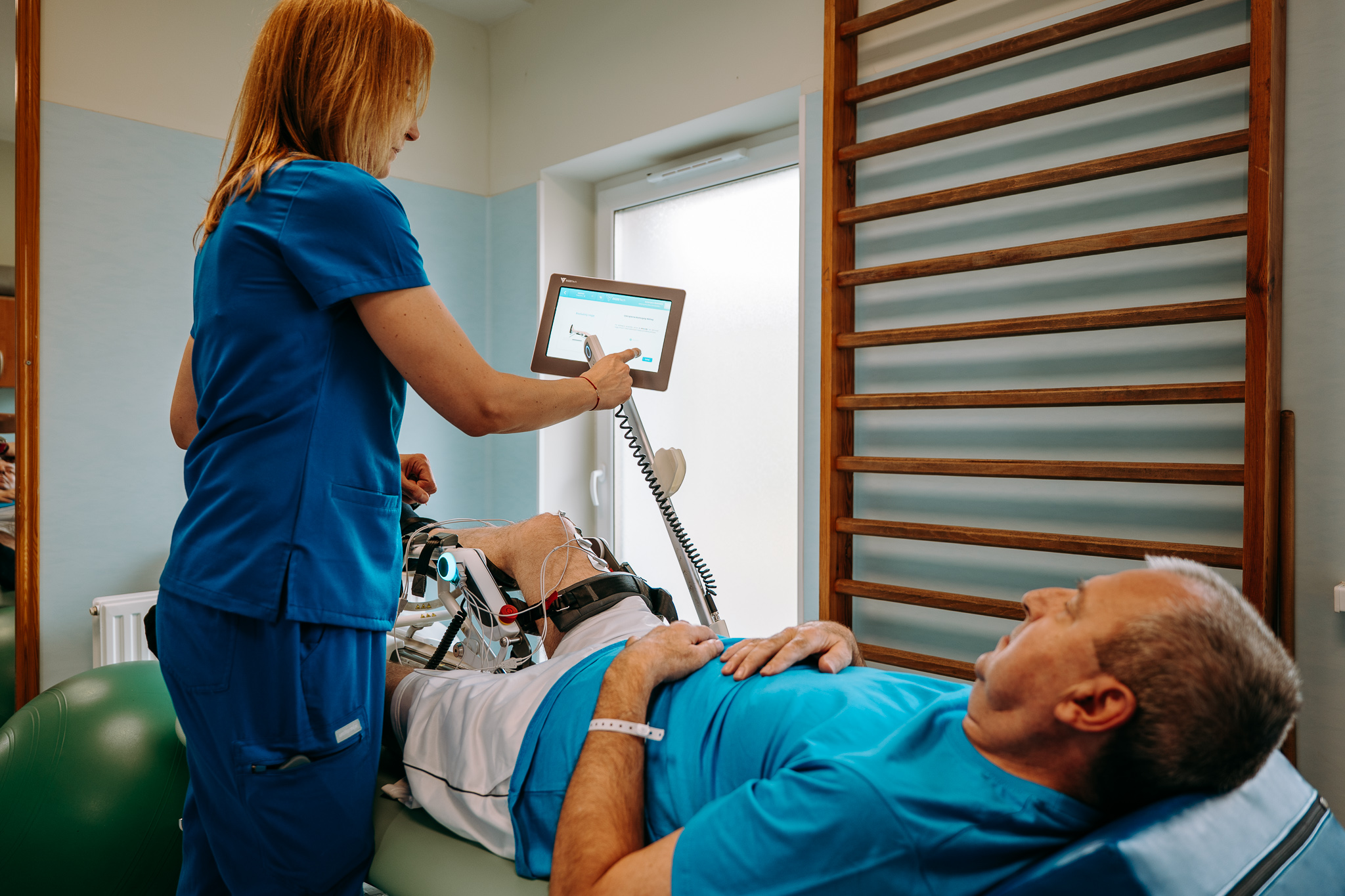
It’s easier for me to exercise with the robot. I can see the number of repetitions, I can see progress.
MR EUGENIUSZ
The ability to observe results increases patient engagement and motivates them to continue working.
The starting point
Mr. Eugeniusz was diagnosed with primary progressive multiple sclerosis in 2013. In recent years, his greatest problem has been the gradual deterioration of his mobility.
Medical history
Primary progressive multiple sclerosis, diagnosed in 2013.
Main challenge
Deterioration of gait associated with weakening of the lower limb muscles and foot drop.
Additional challenges
Difficulty getting out of bed, moving feet while walking, and maintaining confidence and safety while moving.
THERAPEUTIC CHALLENGE
Improve movement control and gait safety
The main therapeutic challenge is to facilitate the patient’s lower limb movements and improve gait.
Therapy focuses on:
- Activating and strengthening weakened muscles,
- increasing range of motion,
- improving foot transfer during gait,
- reducing foot drop,
- improving confidence and safety in movement.
The goal was not simply to improve the results measured by the device, but to help the patient regain real independence in everyday life.
THERAPY
Active training supported by EMG technology
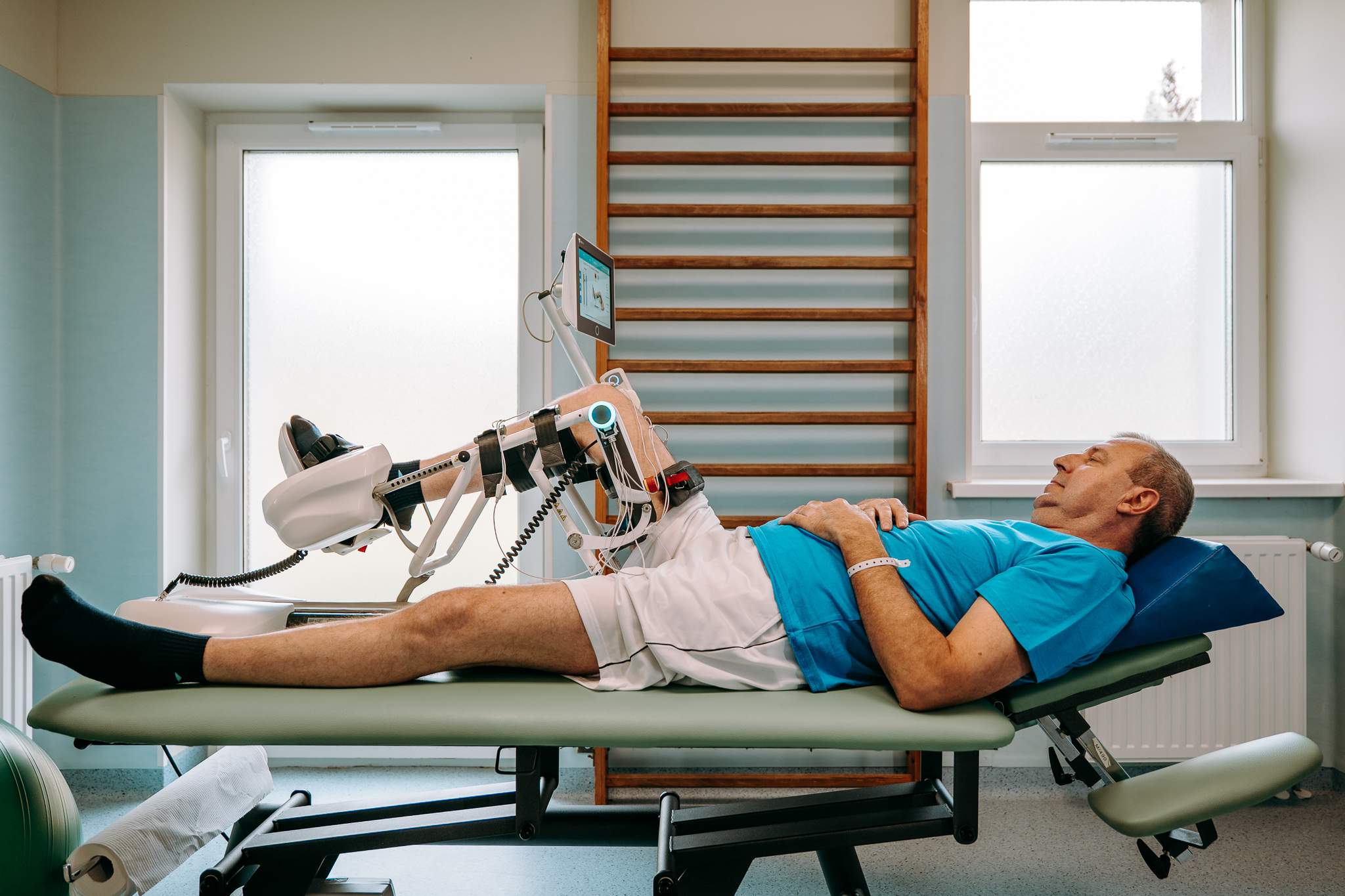
The Luna EMG and Sidra LEG systems are used in the rehabilitation ward. An important element of Mr. Eugeniusz’s therapy is active training using electromyography.
EMG technology makes it possible to utilize the activity of weakened muscles during exercise, supporting movement through a fuller range of motion.
Active muscle work
Fuller range of motion
Regular training for 3 weeks
Repetitive, purposeful movements supported improvements in range of motion, strength, endurance, and motor control.
VIDEO STORY
See what therapy looks like
Learn about Mr. Eugeniusz’s story and see how robotics supports active lower limb therapy in a patient with multiple sclerosis.
THERAPY RESULTS
More confident and safer walking
Mr. Eugeniusz was only halfway through his therapeutic stay, and he already reported an improvement in the way he moved and moved his feet while walking.
BEFORE THERAPY
Foot drop
Difficulty moving your feet while walking
Less confidence when moving
→
DURING THERAPY
Less foot drop
Easier to move your feet
Greater confidence and sense of security
01
Easier foot clearance
The patient noted that stepping forward during walking became easier due to an improved quality of movement.
02
Reduced foot drop
During therapy, Mr. Eugeniusz experienced a reduction in foot drop.
03
Greater confidence while walking
Improved movement control translated into greater confidence and a sense of safety when moving around.
MOST IMPORTANT OUTCOME
Greater mobility safety
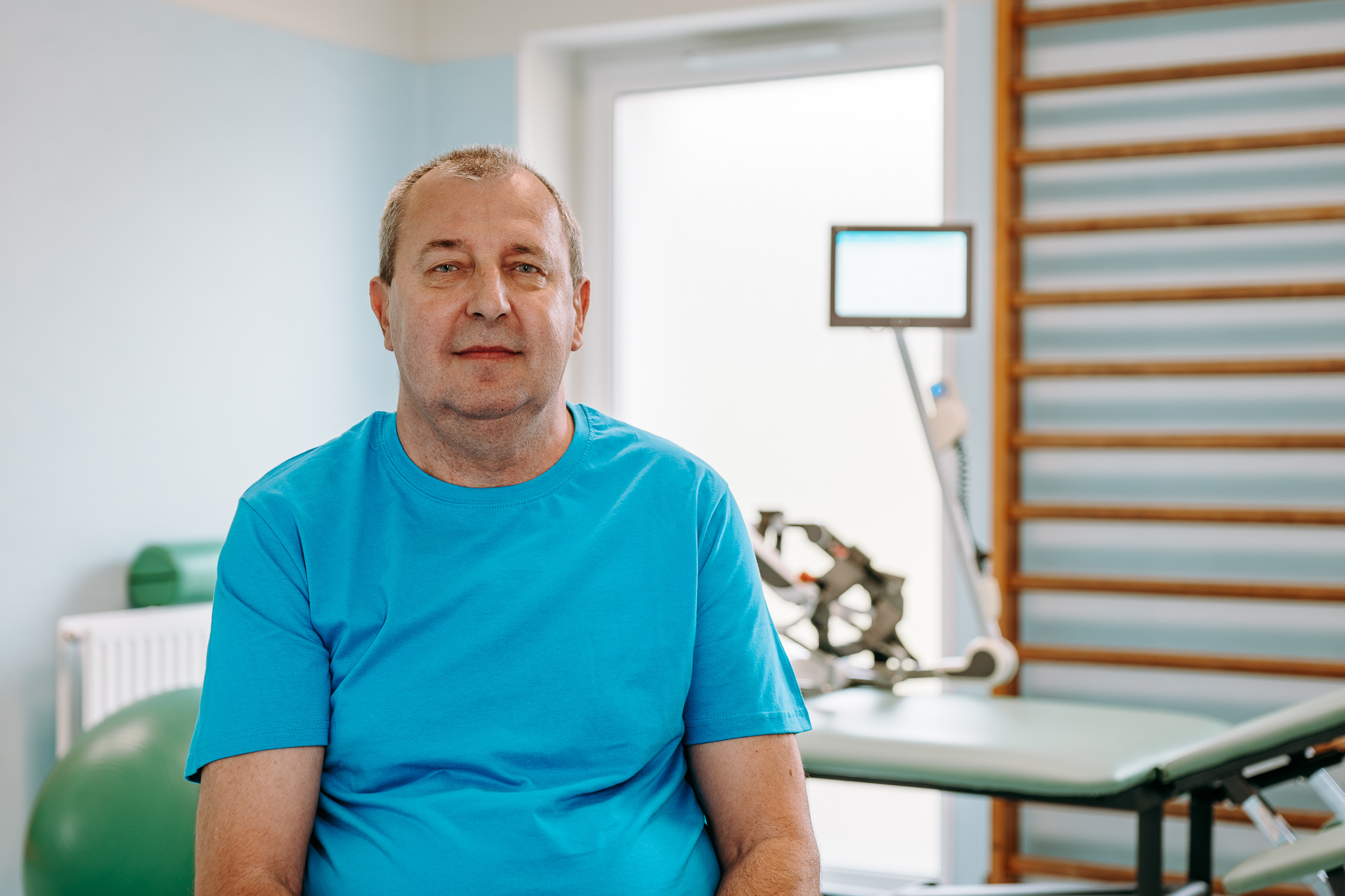
“I feel more confident and safer.”
Improved foot clearance during walking is an important step toward greater independence and freedom in daily life.
SOLUTIONS FOR MODERN REHABILITATION
Would you like to see how Sidra LEG and Luna EMG can support therapy at your facility?
Disclaimer:
This case study presents an individual patient’s experience. Therapy outcomes may vary depending on the patient’s clinical condition, rehabilitation program and other individual factors.